Vendor and supply chain security basics for practical risk control
Supply chain security protects an organisation from weaknesses in vendors, service providers and the digital supply chain. A compromised supplier can expose systems, data or customers, so organisations need visibility beyond their own networks.
Organisations reduce supply chain risks by mapping external dependencies, assessing cybersecurity threats and applying security controls before suppliers gain access. This article explains how supply chain cybersecurity works in practice, from supplier checks and access controls to incident response and ongoing assurance.
Key takeaways
- Map suppliers, systems and access paths.
- Control risk before external access begins.
- Monitor suppliers and respond to incidents.
Map your external dependencies and exposure
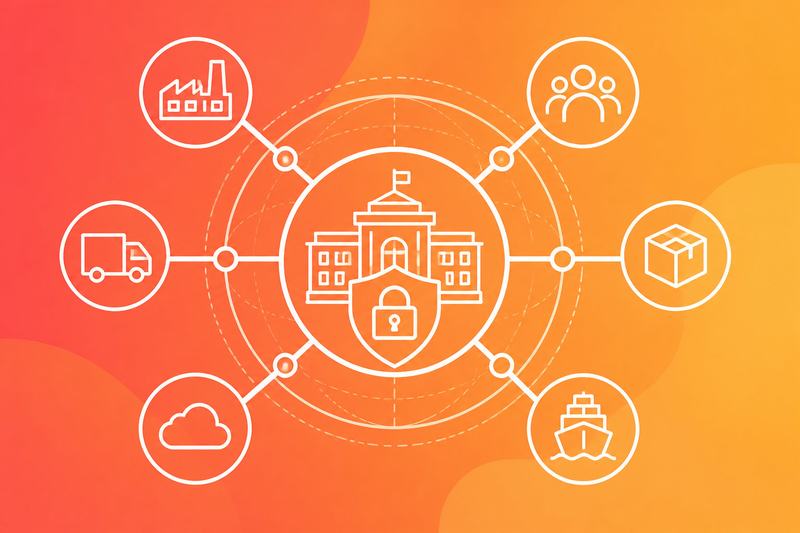
A reliable map shows which external parties connect to systems, data and operational processes. It also records what could happen if a supplier is breached, unavailable or unable to meet its obligations.
Identify vendors, suppliers and hidden dependencies
Organisations should maintain an inventory of every supplier and third-party vendor with a network connection, account, data flow or operational role. It should include cloud platforms, SaaS providers, payment processors, identity providers, managed service providers (MSPs), contractors and traditional suppliers.
The inventory should capture the service owner, contract status, systems used, data exchanged, access method, authentication method and renewal date. It should also record fourth-party dependencies, such as a SaaS provider that relies on another cloud platform or payment processor.
Teams should compare procurement records with identity, network, finance and application data. This can reveal dormant accounts, unapproved services and vendor supply chain dependencies that formal registers miss. Each entry should identify the business process affected if the supplier fails or loses access.
Classify data, access and business criticality
A third-party risk assessment should establish what a supplier can reach and what it can do. Teams should classify customer, employee, financial, authentication and confidential business data before granting access.
They should record whether access is read-only, administrative, API-based, remote or physical. Privileged access, production access and access to identity systems require stronger controls than access to a segregated test environment.
Business owners should rate the effect of compromise or outage on safety, legal duties, revenue, customer service and recovery time. A supplier handling payment data or authenticating users may present greater exposure than one processing non-sensitive information, even if both use the same connection method.
Controls should match the classification. They may include least-privilege permissions, multi-factor authentication, network restrictions, encryption, logging, time-limited accounts, tested exit plans and documented incident notification duties.
Tier third parties by inherent risk
Vendor risk management should rank suppliers before teams assess their controls. Inherent risk reflects the exposure created by the service itself, without assuming that safeguards work.
A practical scoring model can consider:
- Data sensitivity: public, internal, confidential or regulated data
- Access level: no access, limited access, privileged access or system-to-system integration
- Business dependence: replaceable, important or essential service
- Connectivity: isolated, restricted or directly connected to production
- Concentration risk: reliance on one provider, platform or geographic region
- Fourth-party exposure: critical services supplied by the vendor’s own providers
High-risk third parties should receive a detailed assessment, security evidence, contractual controls and regular review. Medium-risk suppliers may need a standard questionnaire and defined monitoring. Low-risk providers still require ownership, approved access and a review when their service, data or connectivity changes.
Recognise how supply chain compromises happen
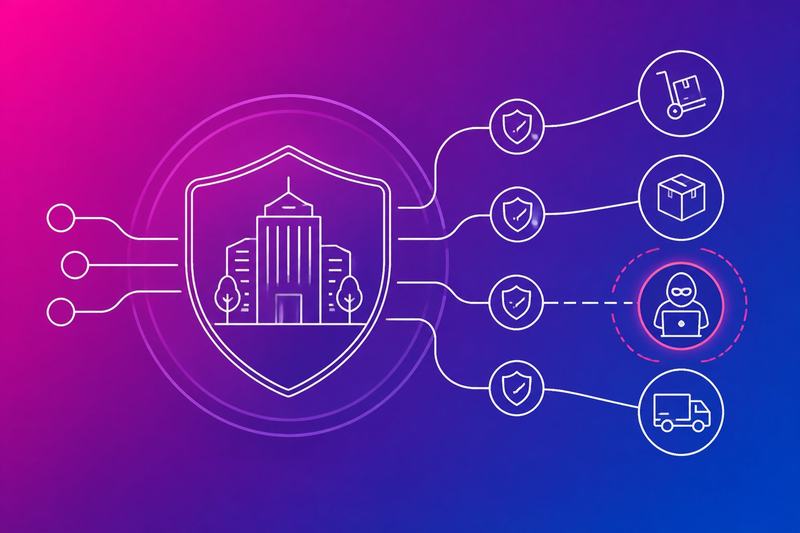
A supply chain compromise can enter through a trusted supplier, a software dependency, a build system or a distribution channel. Attackers commonly seek valid access, introduce malicious code or disrupt operations before defenders can identify the source.
Abuse of vendor access and stolen credentials
Attackers often target supplier accounts because those accounts can reach several customer systems. A third-party breach, phishing campaign or credential theft incident can expose passwords, session tokens or API keys. If a supplier uses the same credentials across customers, one compromise can affect multiple organisations.
Remote administration creates additional risk when vendors can connect directly to servers, endpoints or cloud consoles. An attacker who takes over a vendor account may create a backdoor, change security settings, extract data or deploy malware while appearing to use a legitimate service.
Controls should limit vendor access to named users, approved systems and defined support windows. Organisations should require multi-factor authentication, record administrator activity and review access after each contract or role change. They should also remove dormant accounts and make suppliers report suspected credential theft promptly.
Malicious packages and open-source dependencies
The software supply chain includes third-party libraries, open-source software and packages installed from public repositories. Attackers may publish malicious packages with names similar to trusted projects, take over a maintainer account or add harmful code to a legitimate release.
Repositories such as npm and PyPI can contain useful packages alongside packages that abuse installation scripts, steal environment variables or download malware. A package may also introduce a known CVE or an unreviewed dependency into a production application.
Development teams should pin approved versions, generate a software bill of materials and scan dependencies before release. They should verify package names and maintainers, restrict network access during builds and remove unused libraries. Automated alerts should trigger review when a dependency changes ownership, source or behaviour.
Compromised builds, updates and distribution channels
Attackers can compromise build systems after gaining access to source repositories, developer accounts or build credentials. They may alter source code, insert a backdoor during compilation or replace an artefact after testing has finished. The resulting package can pass normal checks because it came from a trusted process.
Update servers and distribution channels provide another route. A supplier’s compromised software update may deliver malware to many customers through an established installation mechanism. Code-signing keys reduce tampering risk but do not make a signed package safe if the supplier signs malicious code.
Organisations should separate build, test and release permissions. They should protect signing keys with hardware-backed controls, require independent approval for releases and record reproducible build evidence. Customers should verify update provenance, monitor unusual update behaviour and maintain a controlled rollback process.
Ransomware and operational disruption
A supply chain attack can give ransomware operators access to a customer environment through a managed service provider, hosted platform or connected supplier. They may use stolen vendor credentials to move between systems, disable backups and encrypt file servers, endpoints or operational technology.
The impact can include halted production, unavailable customer services and delayed incident response. Insider threats also matter when a trusted employee or contractor misuses access, whether deliberately or after attackers compromise their account.
Organisations should segment supplier connections from critical systems and permit only required protocols and destinations. They should test offline or immutable backups, rehearse supplier-related ransomware attacks and define manual operating procedures. Monitoring should flag unusual login locations, bulk file changes, new administrator accounts and unexpected remote administration.
Apply controls before suppliers connect
A supplier should meet defined access, network, software and contractual controls before it reaches production systems or sensitive data. These controls limit the damage from stolen credentials, vulnerable components, poor change management or weak incident response.
Restrict access with strong identity controls
A compromised supplier account can provide a direct route into internal systems. The organisation should use centralised SSO with MFA, unique user identities and role-based access controls. Shared accounts should be prohibited because they prevent reliable accountability.
Access should follow least privilege and cover only the systems, data and actions required for the supplier’s role. Just-in-time access should grant elevated permissions for a defined task and remove them automatically when the approved period ends. Conditional access should consider device health, location, session risk and authentication strength.
The organisation should review supplier accounts at defined intervals and after role changes, contract changes or staff departures. It should disable dormant accounts promptly and record authentication events, privilege changes and failed access attempts in central audit logs.
Segment networks and monitor third-party activity
A supplier connection should not provide unrestricted access to the corporate network. Network segmentation, firewalls and separate administrative paths should limit access to approved applications, ports and hosts. Access rules should deny traffic by default and permit only documented business requirements.
The organisation should encrypt data in transit and at rest where appropriate, particularly for credentials, personal data and commercially sensitive information. It should monitor supplier sessions with endpoint detection and response (EDR), network telemetry and centralised logs.
Session recording can support investigations for privileged work, but the organisation should define retention, access and privacy rules before enabling it. Alerts should cover unusual login locations, bulk downloads, privilege escalation, unexpected software installation and activity outside agreed support windows.
Secure software development and procurement
Supplier software can introduce exploitable libraries, hidden dependencies or unverified updates. Procurement teams should require a current software bill of materials (SBOM) in a recognised machine-readable format, with the supplier’s process for updating it after releases or newly disclosed vulnerabilities.
The supplier should use software composition analysis (SCA), vulnerability management and documented remediation priorities. Development controls should include peer review, protected branches, signed commits where practical and traceable build provenance. Release packages and updates should use signing or equivalent integrity checks so the recipient can verify their source.
Contracts should define how suppliers notify customers about vulnerabilities, compromised build systems and unsafe software updates. The organisation should test updates in a controlled environment, retain rollback options and verify that emergency fixes do not bypass required security controls.
Set minimum security requirements in contracts
A contract should turn security expectations into measurable duties. It should specify MFA, least-privilege access, encryption, vulnerability remediation times, breach notification contacts, logging requirements, backup practices and secure disposal of data when the relationship ends.
The organisation should assess relevant security certifications, such as SOC 2 or ISO/IEC 27001, but it should verify the scope, issue date and exceptions rather than treating certification as proof that every risk is covered. Supplier security audits, evidence requests and testing should match the services and data involved.
Service level agreements (SLAs) should set response and recovery targets for security incidents and critical defects. Contracts should also preserve reasonable audit rights, require cooperation with investigations and control subcontracting, so vendor relationships remain accountable when services or personnel change.
Manage incidents, assurance and ongoing risk
Effective oversight combines tested incident response, evidence-based assurance and practical recovery planning. Organisations should link supplier controls to business impact, legal duties and clear decisions about when to restrict, replace or exit a relationship.
Prepare for a vendor security incident
A vendor incident can expose customer data, interrupt essential services or provide attackers with access to internal systems. The organisation should assign an incident owner, define escalation contacts and require suppliers to report suspected breaches within agreed timeframes.
The response plan should state who can isolate integrations, revoke credentials, block network access and preserve evidence. It should also define when legal, communications, insurers, regulators and affected customers must be involved. GDPR and HIPAA may impose specific breach notification duties, while contracts should set out cooperation, investigation access and notification costs.
The organisation should test the plan with software vendors and critical suppliers. Exercises should cover a data breach, a prolonged outage and a compromised software update. NIST Cybersecurity Framework functions can structure preparation, detection, response and recovery, while cyber insurance requirements should support rather than replace operational controls.
Review evidence and reassess high-risk relationships
Security reviews should examine evidence that matches the supplier’s access and business impact. Useful material includes independent security audit reports, penetration test summaries, vulnerability management records, incident logs, access reviews and business continuity test results.
Third-party risk management teams should record exceptions, expired evidence and unresolved findings in a risk register. They should reassess suppliers after a major breach, ownership change, new integration or material change in service. NIST SP 800-161 provides a useful structure for supply chain risk management, particularly where suppliers support critical infrastructure or deliver software.
A high-risk supplier may need stronger requirements, such as multifactor authentication, secure development evidence, rapid notification and recovery testing. CMMC obligations may also affect organisations handling controlled unclassified information. Compliance risk and reputational damage should inform the decision, but neither should replace documented technical evidence.
Maintain continuity, compliance and exit plans
Business continuity plans should identify which supplier failures would stop essential operations, how long each service can remain unavailable and what manual alternatives exist. They should include backup suppliers, tested data restoration, offline contact details and defined recovery priorities.
Contracts should protect the organisation if a supplier suffers a data breach or cannot meet service commitments. They should address audit rights, data location, subcontractors, retention, secure deletion, assistance during transition and access to usable data in a standard format.
Exit plans should cover both an orderly termination and an urgent replacement. Suppliers should support credential removal, data transfer and dependency mapping without leaving hidden access behind. Reviews should also confirm that insurance, GDPR or HIPAA obligations, CMMC requirements and sector-specific duties remain covered after the relationship ends.
Frequently asked questions
Vendor and supply chain security depends on knowing who can access systems, what they can change and how quickly they must report problems. Effective controls combine due diligence, least-privilege access, software integrity checks, monitoring and tested response plans.
What is vendor and supply chain security?
Vendor and supply chain security protects an organisation from risks introduced by suppliers, contractors, service providers and technology dependencies. It covers people, processes, hardware, software, data and connections outside the organisation’s direct control.
A supplier may expose an organisation through a compromised account, unsafe software update, weak hosting security or poor handling of sensitive data. Security teams should identify these dependencies, set control requirements and monitor compliance throughout each supplier relationship.
Why is supply chain security important for cyber security?
A supplier may have privileged access to networks, cloud services, source code or customer information. If an attacker compromises that supplier, the attacker may use trusted connections to bypass controls inside the organisation.
Security teams should assess suppliers before onboarding and review them when their services, access or risk changes. Strong contracts, restricted access, logging and tested incident procedures reduce the chance that a supplier problem reaches customers.
What are the main risks from third-party vendors?
Common risks include:
- Unauthorised access: stolen vendor credentials or excessive permissions can expose systems and data.
- Data loss: a supplier may mishandle, misconfigure or improperly dispose of personal or confidential information.
- Compromised software: attackers may insert malicious code into an update, package or build process.
- Service disruption: supplier outages, ransomware or operational failures can interrupt critical services.
- Weak subcontractor controls: a vendor may pass work to another provider without adequate oversight.
- Poor incident reporting: delayed notification can increase harm and limit response options.
- Compliance failures: a supplier may fail to meet contractual, legal or regulatory requirements.
How do you assess a vendor's security controls?
The organisation should first classify the vendor by data access, system access, service criticality and potential customer impact. Higher-risk vendors need deeper assessment than suppliers with no access to systems or sensitive information.
Assessment evidence may include security policies, independent assurance reports, penetration test summaries, vulnerability management records, access control procedures, encryption details, backup tests and incident response plans. The organisation should verify important claims rather than relying only on a questionnaire.
Contracts should define security requirements, audit rights, breach notification times, subcontractor approval, data deletion, service continuity and exit support. The organisation should record gaps, assign owners and set deadlines for remediation before granting high-risk access.
What controls help secure the software supply chain?
Development teams should maintain an inventory of source code, dependencies, build tools and deployed components. They should scan dependencies for known vulnerabilities, review licences and remove unused packages.
Build systems should use strong identity controls, protected branches, peer review and separate duties for code changes and releases. They should generate and protect build logs, restrict signing keys and publish software only from controlled pipelines.
Teams should verify package sources, pin or lock dependency versions where appropriate and use checksums or digital signatures to detect tampering. They should produce a software bill of materials for important products and maintain a process to investigate newly disclosed vulnerabilities.
What should a vendor risk management programme include?
A programme should define ownership, risk categories, approval thresholds and review schedules. It should cover the full vendor lifecycle, including selection, onboarding, access changes, monitoring, renewal and termination.
Core activities include:
- maintaining a complete vendor and service inventory
- classifying vendors by access, data and business impact
- applying security requirements to contracts
- assessing controls before onboarding
- limiting and reviewing vendor access
- monitoring incidents, vulnerabilities and service performance
- tracking remediation actions to closure
- testing continuity and exit arrangements
- removing accounts, keys and data when services end
Senior owners should review unresolved high-risk findings and accept residual risk formally. Procurement, legal, security, privacy and service owners should use a shared process so that commercial decisions do not bypass security requirements.