Ransomware basics for operators: threats, controls and recovery
Ransomware can disrupt operations, expose sensitive data and create costly recovery work. Operators reduce ransomware risk by limiting access, protecting backups, monitoring for abnormal activity and practising a tested response.
This guide explains how ransomware attacks progress, which controls give organisations the strongest protection and what teams should do after a suspected incident. It also covers practical questions that help businesses prepare before an attacker reaches critical systems.
Key takeaways
- Ransomware can affect availability, confidentiality and business continuity.
- Access controls, resilient backups and monitoring reduce operator risk.
- A rehearsed response helps contain incidents and support recovery.
What operators need to know about ransomware
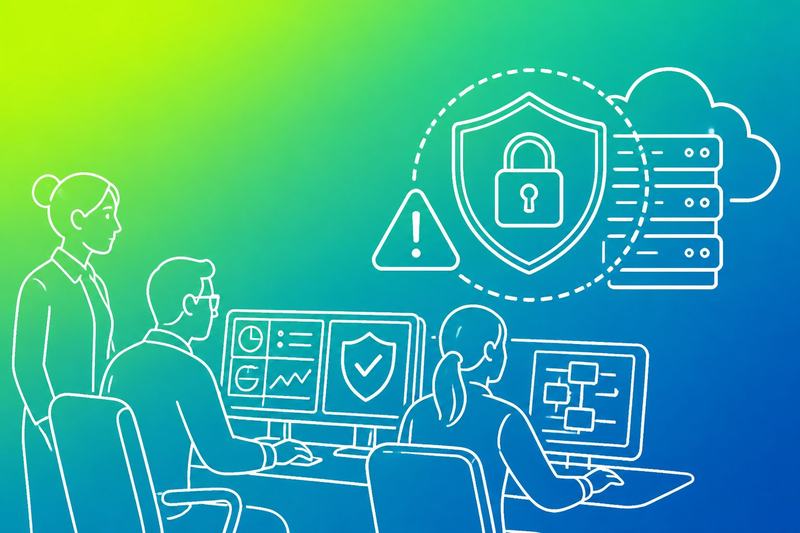
Ransomware combines malicious software, data encryption and extortion. Operators need to understand how attackers gain access, what they can affect and which controls limit disruption before encrypted files or stolen sensitive data reach customers.
Encryption, decryption and the ransom note
Ransomware encrypts files so authorised users cannot open them. Attackers commonly target shared drives, databases, backups and virtual machines, although the exact impact depends on the malware and the access it obtains. Some malware also deletes or damages recovery data to make restoration harder.
A ransom note usually identifies the affected organisation, provides a deadline and sets out a ransom demand. It may include a contact site and instructions for paying with bitcoin or another cryptocurrency. Payment does not guarantee a working decryption key, deletion of stolen data or continued access to systems.
Operators should isolate affected hosts, preserve logs and engage incident response specialists. They should not run unknown decryptors or alter evidence without advice. Tested offline or otherwise protected backups, separate administrative accounts, network segmentation and monitored endpoint controls reduce the chance that one compromised account can encrypt the wider environment.
Data extortion and double extortion
Data extortion occurs when cybercriminals steal information and threaten to publish it, sell it or disclose it to customers, regulators and business partners. Sensitive data may include personal records, credentials, financial documents, contracts, source code and operational information.
Double extortion combines data theft with file encryption. An organisation may therefore face service disruption even if it can restore its systems, while stolen data creates legal, regulatory and contractual risks. Attackers may publish samples as proof, but those samples do not establish that they hold every claimed file.
Operators should treat unusual outbound transfers, archive creation and access to large data sets as warning signs. They should restrict privileged access, monitor bulk downloads, encrypt sensitive data at rest and in transit and keep reliable records of where important data resides. A suspected breach also requires prompt legal, regulatory and customer notification decisions based on applicable obligations.
RaaS roles, affiliates and ransomware gangs
Ransomware-as-a-service, or RaaS, separates the roles within cybercrime. A ransomware group may develop malware, operate payment infrastructure and negotiate with victims, while affiliates gain access to organisations, move through networks and deploy the payload. Other participants may broker access, steal data or launder cryptocurrency.
This structure lets ransomware operators reuse established tools and services. It also means that an intrusion can begin with stolen credentials, an exposed remote service, phishing or a compromised supplier before any ransomware appears. The people who gain access may not be the same group that controls the malware or demands payment.
Operators should focus on the intrusion path rather than only the file extension or ransom note. They should enforce multifactor authentication, patch internet-facing systems, disable obsolete remote access, limit administrator rights and review supplier access. Centralised logging, tested detection rules and rehearsed isolation procedures help identify affiliate activity before it reaches critical systems.
How ransomware attacks progress
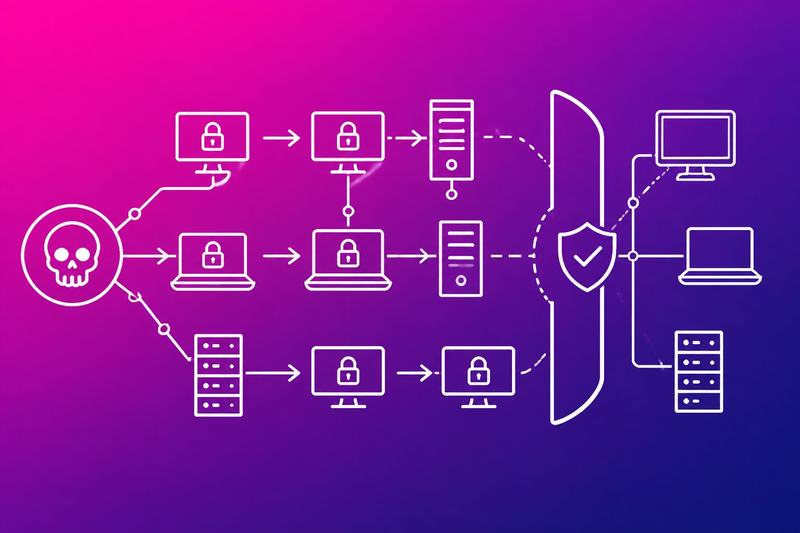
A ransomware attack commonly moves from initial access to account takeover, internal spread, data theft and operational disruption. Strong identity controls, network separation, monitored remote access and tested recovery processes can interrupt each stage.
Initial access through phishing and stolen credentials
Attackers often begin with a phishing email that imitates a supplier, colleague or service provider. Phishing campaigns may use a malicious attachment, a link to a fake sign-in page or a business email compromise (BEC) request. A successful lure can expose passwords, session tokens or access to a workstation.
Compromised credentials also provide initial access without a visible attachment. Attackers may reuse leaked passwords, conduct a brute-force attack against weak accounts or target remote access services. Exposed Remote Desktop Protocol (RDP) services, particularly on port 3389, and poorly protected VPNs create direct paths into internal systems.
Operators should require phishing-resistant multifactor authentication where possible, disable legacy authentication and restrict remote access by device, network and role. They should monitor unusual sign-ins, impossible travel patterns, repeated login failures and new mailbox forwarding rules.
Privilege escalation and lateral movement
After gaining a foothold, attackers seek privilege escalation. They may exploit unpatched software, steal administrator credentials, abuse excessive permissions or extract secrets from endpoints and memory. A standard user account can become a route to domain-wide control if administrators use it on compromised systems.
Lateral movement lets attackers reach file servers, virtualisation platforms, identity services and backup management consoles. They may use legitimate administration tools, remote services or stolen tokens to blend into normal activity. Flat networks and shared local administrator passwords increase the potential impact of a ransomware attack.
Operators should separate administrator accounts from daily-use accounts, apply least privilege and rotate local administrator passwords. Network segmentation should limit workstation access to servers and management interfaces. Centralised logging should alert on new privileged accounts, unusual remote administration and authentication between systems that do not normally communicate.
Exfiltration, encryption and recovery disruption
Many ransomware attacks include data exfiltration before encryption. Attackers may collect customer records, contracts, credentials or operational documents and transfer them through approved cloud services or external infrastructure. They may then threaten disclosure to increase pressure on the organisation.
Encryption can affect endpoints, file shares, databases and virtual machines. Attackers often try to disable security tools, delete shadow copies and access backup consoles before deployment. Online backups and cloud backups remain at risk when they use the same identity provider, credentials or network as production systems.
Operators should protect backup administration with separate identities, multifactor authentication and restricted management paths. They should maintain offline or logically isolated copies, monitor large transfers and test restoration regularly. Detection should prioritise mass file changes, backup deletion, security service tampering and unusual access to sensitive repositories.
Controls that reduce operator risk
Strong controls limit account abuse, restrict ransomware movement and preserve clean recovery options. Operators should combine identity controls, network boundaries, tested backups and monitoring so that one stolen password or missed update does not expose the whole environment.
Secure identity and remote access
A stolen password can give an intruder a valid route into servers, cloud services or remote access tools. Operators should require multi-factor authentication (MFA) for email, VPNs, remote desktop gateways, cloud consoles and administrator accounts. They should disable legacy authentication and remove unused accounts promptly.
An effective identity and access management (IAM) process assigns access by role and applies least privilege. Privileged account management (PAM) should separate administration from daily work, issue temporary elevation where possible and record privileged sessions. A local administrator password solution (LAPS) should provide unique, rotated passwords for managed devices.
Operators should place remote access behind a firewall, restrict source locations where practical and prohibit direct exposure of RDP to the public internet. A password manager should generate unique credentials, while security awareness training should teach staff to report MFA prompts they did not initiate and suspicious login alerts.
Contain spread across the network
Ransomware can spread rapidly when workstations, servers and management systems share unrestricted access. Network segmentation should separate user devices, server networks, domain controllers, backup systems and operational technology. Firewalls should allow only the specific ports and services each segment requires, with administrative paths kept separate from normal user traffic.
Operators should review access control rules regularly and remove broad permissions that no longer serve a business need. They should also restrict service accounts, disable unused protocols and prevent ordinary users from installing software. Misconfiguration, unsupported systems and unpatched internet-facing services increase the attack surface, so operators should prioritise software updates based on exposure and business impact.
Endpoint antivirus or endpoint detection should block known malicious activity and flag unusual encryption, tool use and privilege changes. Intrusion detection systems (IDS) can identify suspicious traffic between segments. Operators should investigate alerts that show a new administrator, mass file changes, disabled security software or unexpected connections to external infrastructure.
Protect backups and detect early warning signs
If ransomware reaches backup systems, recovery may fail even when production data remains intact. Operators should maintain offline, immutable or otherwise isolated backup copies, including protected cloud backups where appropriate. Backup credentials should use separate identities and MFA, and backup consoles should not rely solely on the same domain accounts used by production systems.
Operators should define recovery priorities and test restoration regularly. Tests should verify that files, applications, permissions and required dependencies can be restored within the organisation’s recovery targets. Logs should record deletion attempts, retention changes and unusual backup access, with alerts sent outside the affected environment.
Threat hunting should examine signs that precede encryption, including new scheduled tasks, unexpected remote administration, credential dumping activity, disabled antivirus and abnormal file renaming. Operators should preserve relevant logs and isolate affected devices quickly, while avoiding actions that destroy evidence or spread the incident further.
Responding to a suspected ransomware incident
Operators should isolate affected systems, protect evidence and activate the incident response plan without delaying for perfect certainty. They should assess safety, operational impact and possible data breach exposure while using trusted channels to coordinate with leadership, legal advisers, technical responders and law enforcement.
Containment, evidence and incident triage
The incident response lead should disconnect infected endpoints from wired and wireless networks, disable compromised accounts and block known malicious connections. They should avoid switching off systems unless necessary to protect people or critical infrastructure, because volatile evidence may be lost.
The team should preserve ransom notes, malware samples, alerts, logs, running processes, memory captures and relevant timestamps. It should record each action in an incident log and use clean administrator accounts and trusted devices for coordination. A ransomware operator may use stolen credentials, remote management tools and backup access, so containment should include identity systems, hypervisors, cloud platforms and backup networks.
The triage should identify the initial access route, affected assets, encryption status, persistence and signs of exfiltration. Incidents involving personal, sensitive or regulated data require data breach assessment. Operators should compare findings with known ransomware tactics and document indicators that may help identify groups such as Conti or LockBit without treating attribution as certain.
Recovery decisions and ransom payment risk
Recovery should start with clean, tested backups that attackers could not alter or reach. The team should rebuild compromised systems from trusted media, rotate exposed credentials, remove unauthorised persistence and validate endpoint, network and identity controls before reconnecting services.
Leaders should prioritise life safety, critical services, critical infrastructure and customer-facing functions. The incident response plan should define restoration order, approval authority and communications responsibilities. Operators should not assume that a decryptor will work or that payment will prevent publication of stolen data.
A ransom decision requires legal, financial, operational and security review. Sanctions screening and law enforcement consultation matter because payment can create legal risk in some circumstances. The team should preserve negotiation records and avoid direct engagement by untrained staff. Payment also funds the ransomware ecosystem and may encourage further attacks, while a ransomware operator may demand additional payment after receiving funds.
Reporting and external support
The organisation should report suspected cyber incidents promptly through appropriate channels. In the United States, the FBI and its Internet Crime Complaint Center, known as IC3, accept ransomware reports. The Cybersecurity and Infrastructure Security Agency, or CISA, publishes the #StopRansomware Guide and provides incident support. The NSA, U.S. Secret Service and relevant state or local law enforcement may also assist, depending on the incident.
Critical infrastructure organisations should use sector contacts and the Multi-State Information Sharing & Analysis Center, or MS-ISAC, where applicable. They should share indicators, affected services, attack times and observed ransomware tactics through approved channels while protecting sensitive information.
The organisation should meet regulatory, contractual and privacy notification duties with legal advice. External responders should receive a controlled evidence package, including logs, ransom notes, affected assets, containment actions and known data exposure. They should use separate communications channels if the corporate environment may be monitored by the attacker.
Frequently asked questions
Ransomware can interrupt core services, expose data and impose recovery costs. Operators reduce risk by controlling access, limiting spread, maintaining tested backups and following a documented response plan.
What is ransomware and how does it affect operations?
Ransomware is malicious software that prevents access to systems or data, usually by encrypting files. Criminals may also steal data and threaten to publish it unless the victim pays.
Operational effects can include halted production, unavailable customer services, delayed payments and loss of access to safety or monitoring systems. Recovery may require rebuilding devices, restoring clean data and investigating whether attackers retained access.
What are the main stages of a ransomware attack?
Attackers commonly gain access through stolen credentials, phishing, exposed remote services or an unpatched vulnerability. They then establish persistence, increase privileges and identify valuable systems.
Before encryption, they may disable security tools, delete backups and move between systems. They can steal data before deploying ransomware across selected devices or the wider environment.
What are the most common types of ransomware?
Encryptors lock files and systems, preventing normal access until recovery or decryption. Locker ransomware blocks access to a device or account without necessarily encrypting individual files.
Double-extortion ransomware combines encryption with data theft and threatens publication. Ransomware-as-a-service allows affiliates to use malware and infrastructure supplied by another criminal group, although specific capabilities vary between operations.
How can operators prevent a ransomware attack?
Operators should require phishing-resistant multi-factor authentication for privileged and remote access where practical. They should remove unused accounts, apply security updates promptly and restrict remote administration to approved networks and devices.
They should segment critical systems so one compromised account cannot reach every environment. Backups should include offline or otherwise isolated copies, use separate administrator credentials and undergo regular restoration tests.
Endpoint protection, centralised logging and network monitoring can help identify unusual encryption, privilege changes or data transfers. Staff should know how to report suspicious messages, unexpected login prompts and unusual device behaviour.
What should an operator do immediately after discovering ransomware?
The operator should activate the incident response plan and record the time, affected systems and observed symptoms. They should isolate infected devices from networks without destroying evidence, while avoiding unnecessary shutdowns unless safety requires it.
The operator should protect unaffected systems by disabling suspected accounts, restricting network paths and pausing automated jobs that could spread the malware. They should contact internal security staff, senior management, legal advisers, insurers and appropriate authorities under the organisation's procedures.
They should preserve logs, ransom notes, suspicious files and relevant system images for investigation. They should not delete evidence, restore from unverified backups or negotiate alone with the attacker.
Is it legal to pay a ransomware demand?
The legality of payment depends on the relevant jurisdiction, sanctions, anti-money-laundering rules and the identity of the recipient. A payment may breach sanctions or other laws if it benefits a prohibited person or organisation.
Before considering payment, the operator should obtain legal advice and check applicable government guidance. Payment does not guarantee decryption, deletion of stolen data or an end to further attacks, and it can encourage continued criminal activity.