
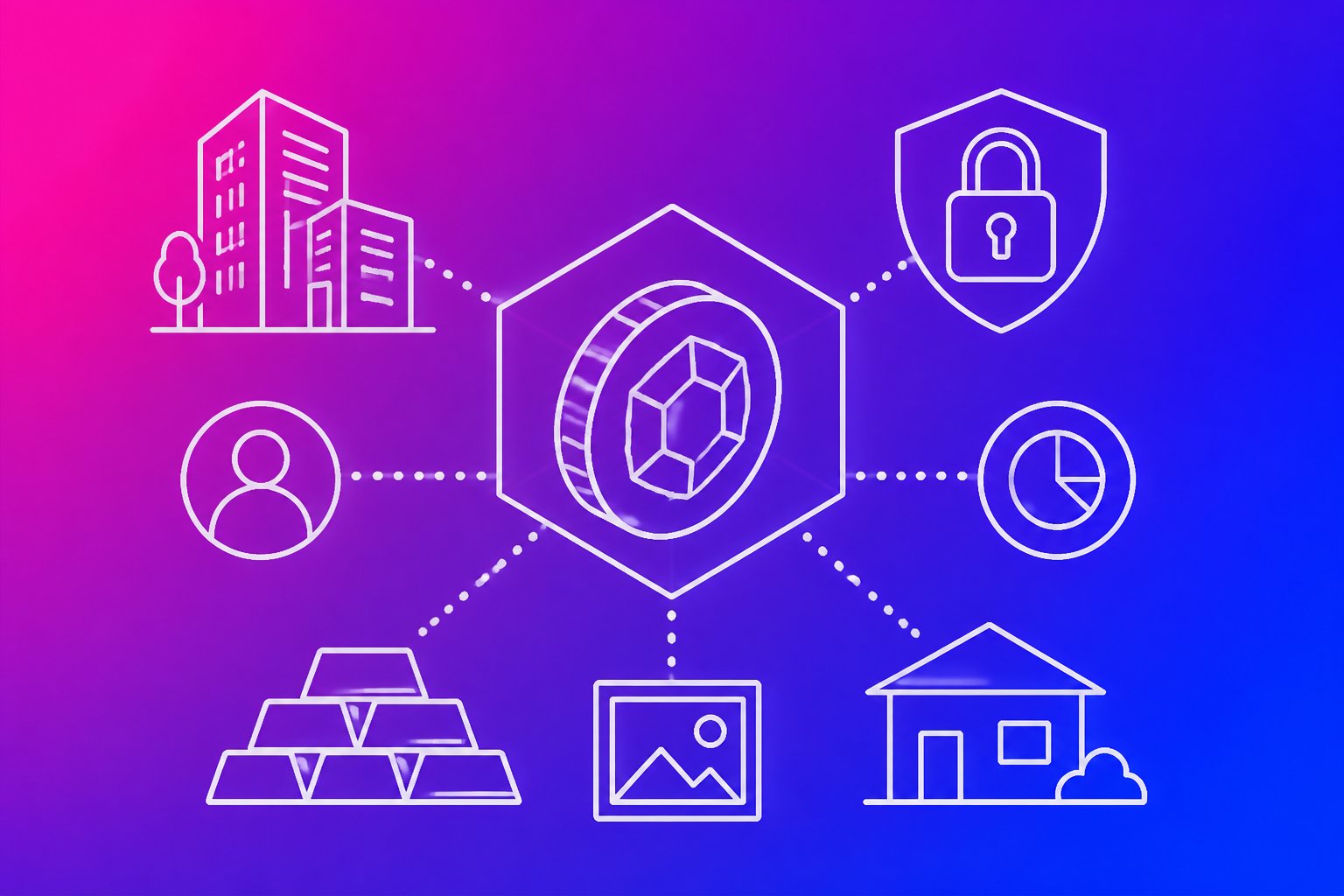
Tokenisation basics for business: a practical guide to digital assets
Tokenisation gives businesses a way to represent ownership, rights or claims as digital tokens on a blockchain or other shared ledger. For a business, tokenisation means linking a digital token to a defined legal right, asset or transaction record, while keeping ownership, transfers and settlement aligned.
Tokenisation for businesses can apply to real-world assets, invoices, funds, securities or access rights. The technology may support faster settlement, clearer records and programmable transactions, but it does not remove legal, operational or cyber risks. The token’s value depends on what it represents and how reliably the business maintains the underlying records.
This guide explains how tokenised assets operate, where digital tokens create practical value and what teams should verify before adopting them.
Key takeaways
- A token must represent a clearly defined right or asset.
- Shared ledgers can improve records, transfers and settlement.
- Legal, operational and security controls remain essential.
What a token represents

A token records a defined relationship between a holder and an asset, right or service. Its practical value depends on the legal documents, ownership records and system rules that connect the digital record to the underlying arrangement.
Separate the asset, token and legal right
A tokenised asset is not the same as the token itself. The asset might be a building, a loan, fund units or another financial instrument. The token is a digital record that may represent a claim connected to that asset.
The legal right determines what the holder can actually enforce. It might provide ownership, repayment, income, voting power, access to a service or only a contractual claim against an issuer. The blockchain record can show who controls or holds a token, but it does not automatically prove legal ownership of the underlying asset.
For tokenised real estate, for example, the token might represent shares in a company that owns a property rather than direct ownership of the property. The company’s constitution, shareholder register, property documents and token terms must align. If they do not, the token holder may have a digital balance without the expected legal right.
Choose the legal structure and ownership record
The issuer must decide which legal structure holds the asset and where ownership is recorded. Possible records include a company’s shareholder register, a fund register, a loan agreement, a custodian’s books or a contractual schedule linked to wallet addresses.
The token terms should identify:
- the issuer and asset holder
- the holder’s legal rights
- transfer restrictions
- redemption or payment obligations
- voting and governance rights
- the record that determines ownership
A blockchain ledger can provide a time-stamped transfer history, but the governing documents must state whether that record is authoritative. Some arrangements treat the wallet address as the holder. Others require an approved intermediary to update the legal register after a compliant transfer.
This distinction affects fractional ownership and fractionalisation. Dividing an economic interest into tokens does not necessarily divide the underlying asset title. The structure must explain how distributions, transfers and disputes operate.
Distinguish security tokens from utility tokens
A security token generally represents an investment interest, debt claim, share, fund unit or another right that may fall within securities or financial-services regulation. Classification depends on the token’s rights, economic purpose and distribution model, not simply on its name or technical design.
An issuer should assess whether the token gives holders a right to profits, repayment, income, governance or an interest in pooled assets. Those features can support a securities classification and may trigger rules on authorisation, disclosure, financial promotions, investor eligibility, custody and secondary transfers.
A utility token usually provides access to a product or service. It should not be described as a utility token merely to avoid regulation if buyers primarily expect financial returns. The token terms, marketing, issuer promises and actual use all matter.
The business should document its classification analysis and retain the evidence behind it. The digital ledger records token movements, while the legal and compliance records show why those movements are permitted.
How tokenised assets operate

Tokenised assets combine legal documentation, a blockchain record and operating controls. The token may record ownership or another right on-chain, while contracts, identity records, asset registers and payment accounts often remain off-chain.
Issue tokens through a controlled lifecycle
Issuance starts with the legal structure. The issuer defines what each token represents, such as a fund interest, debt claim or ownership share, then records those rights in the offering documents and relevant registers. The token does not create ownership by itself unless the legal framework recognises that connection.
A controlled lifecycle normally includes:
- Asset verification: the issuer confirms the underlying asset, valuation method and ownership records.
- Token creation: approved token standards and smart contracts define supply, transfer rules, voting rights, redemption and dividend distribution.
- Allocation: eligible investors receive tokens in verified wallets or through a qualified custodian.
- Ongoing administration: the issuer updates records for transfers, corporate actions, redemptions and cancellations.
The blockchain provides a time-stamped transaction history. Off-chain records still matter where the legal register, valuation evidence or investor agreements sit outside the distributed ledger.
Apply identity and transfer controls
A wallet address does not automatically identify its owner. Issuers and platforms therefore connect wallets to digital identity records and complete know your customer (KYC) and anti-money laundering (AML) checks before granting access.
Smart contracts can enforce transfer restrictions, including approved-wallet lists, investor eligibility, holding limits and jurisdictional rules. A transfer may fail if the receiving wallet lacks approval, if the investor has not passed a required check or if the transaction breaches the governing documents.
This control layer supports regulatory compliance, but it does not replace legal and operational review. Compliance teams must monitor sanctions exposure, suspicious activity, privacy obligations and changes in investor status. Public blockchains may expose transaction data, so operators may use permissioned networks, privacy controls or off-chain identity systems while recording only the necessary proof on-chain.
Manage custody, settlement and reconciliation
Investors may hold tokens in self-managed wallets, through a custodian or in an account controlled by a transfer agent. Each model creates different responsibilities for private-key security, transaction approval, recovery and access to corporate actions.
Settlement infrastructure connects the token ledger with payment systems, bank accounts and asset records. Delivery-versus-payment arrangements can release tokens only when the corresponding funds arrive, reducing unsettled exposure. Faster settlement remains useful only when the cash leg, legal transfer and operational approvals move together.
Operators must reconcile the blockchain record with off-chain books after issuance, transfers, redemptions and dividend payments. They should investigate differences rather than overwrite them. A reliable control record shows the transaction hash, wallet or custodian account, authorised instruction, cash movement and resulting ownership entry.
Business value, risks and practical uses
Tokenisation can record ownership, transfer restrictions and servicing actions on a shared ledger. Its business value depends on verified rights, sufficient demand, reliable settlement and controls that meet applicable regulatory requirements.
Assess liquidity, demand and valuation
Tokenisation does not create market liquidity by itself. An issuer should identify likely buyers, permitted jurisdictions, transfer limits, minimum lot sizes and the trading venues that could support a secondary market. Financial institutions and asset managers may require evidence of custody, reporting, settlement and investor eligibility before considering adoption.
Valuation needs an auditable basis. For private credit, receivables or trade finance, records should show the obligor, payment terms, collateral, arrears and recovery process. For carbon credits, warehouse receipts or other commodities, the register should connect each token to a defined unit and prevent duplicate claims. Independent due diligence can support credibility, but it cannot replace market demand.
Select viable asset and operating use cases
The strongest use cases usually involve fragmented ownership, repeated transfers or costly reconciliation. Private credit funds can represent loan interests while recording allocations, payments and servicing events. Receivables and trade finance programmes can connect invoices to approval records, payment status and collateral controls.
Businesses should also test operational benefits before issuing tokens. Supply chain management may use tokenised warehouse receipts to track custody and release conditions. Healthcare organisations may use controlled records for consent or claims workflows, subject to privacy rules. Asset managers should compare expected savings in settlement and administration with technology, legal, custody and integration costs.
A practical assessment should document:
- the legal right represented by each token
- the system that remains the authoritative record
- transfer and redemption procedures
- servicing, restructuring and recovery responsibilities
- insurance and collateral arrangements
Plan for regulation and operational resilience
The token’s legal classification depends on its rights, structure and distribution. An issuer may need licensing, investor disclosures, transfer controls and financial-crime checks. Requirements can involve securities regulators such as the SEC, banking supervisors such as the OCC or rules in each investor’s jurisdiction. Regulatory uncertainty should form part of the project risk assessment, not an assumption that technology removes existing obligations.
Operational resilience requires more than blockchain availability. The issuer should test key management, identity controls, smart-contract changes, cyber incidents, vendor failure and ledger outages. Records should support reconciliation, audits and recovery if a participant becomes insolvent. Contracts must state who can pause transfers, correct records, enforce collateral, continue servicing or manage restructuring and recovery. Clear regulatory treatment and documented control ownership support institutional adoption.
Frequently asked questions
Tokenisation represents rights in an asset through digital tokens recorded on a ledger. Its practical value depends on enforceable ownership, accurate records, suitable infrastructure and compliance with the rules covering the asset and its transfer.
What is tokenisation in finance and how does it work?
Tokenisation converts rights linked to an asset or financial instrument into digital tokens. The token may represent ownership, a claim to income, a debt obligation or another contractual right.
An issuer defines the rights, restrictions and transfer conditions. A ledger then records token creation and transfers, while legal documents establish what those records mean and who can enforce the underlying rights.
The ledger does not automatically prove legal ownership. The issuer needs a clear link between the token, the contractual terms and the asset or obligation it represents. An introduction to tokens and tokenisation explains how ownership records, settlement and asset servicing fit into the model.
How does tokenisation differ from traditional asset ownership?
Traditional ownership usually relies on legal agreements, registries, certificates or records held by intermediaries. Tokenisation adds a digital record that can show issuance, holdings and transfers according to programmed rules.
That record may improve reconciliation and reduce manual processing, but it does not replace the legal framework. A token holder needs to know whether the token grants direct title, a beneficial interest, a contractual claim or access to a service.
Transferability also differs. A traditional asset may require paperwork, broker instructions or registry updates. A token can support electronic transfer, but only when the platform, permissions, identity checks and legal terms allow it.
Which business assets can be tokenised?
Businesses can consider tokenising assets or rights with clearly defined ownership or payment terms, including:
- property interests
- private company shares
- bonds and other debt instruments
- investment fund units
- invoices and receivables
- commodities
- carbon credits
- intellectual property rights
- loyalty points and other business credits
The tokenisation case depends on the asset’s legal structure, valuation method, custody arrangements and transfer restrictions. A guide to tokenising companies and startups describes common applications while highlighting the need to connect the digital token with enforceable rights.
Some assets remain unsuitable where ownership is unclear, valuation is unreliable or the underlying right cannot transfer under applicable law. The business should establish those limits before selecting technology.
What are the main benefits and risks of tokenising assets?
Tokenisation can give participants a shared record of holdings and transfers. It may reduce reconciliation work, support automated settlement and make ownership information easier to audit.
It can also divide eligible interests into smaller units, subject to securities law and the issuer’s terms. This may widen access to an investment, but it does not guarantee liquidity, demand or a fair valuation.
Key risks include:
- unclear legal rights
- inaccurate asset or ownership records
- weak identity and access controls
- smart contract defects
- fraud and operational failure
- limited secondary-market activity
- custody and key-management loss
- privacy and data-protection breaches
- non-compliance with financial promotion or securities rules
A practical guide to tokenisation, compliance risks and implementation treats legal and technical alignment as separate implementation requirements. The business should test both before issuance.
How does tokenisation work in payments and banking?
Payment tokenisation replaces sensitive payment data, such as a card number, with a token that has limited value outside its approved context. A token service provider stores or maps the underlying data and returns the token to the merchant, wallet or payment platform.
The payment network or provider can apply controls covering the merchant, device, transaction type or recurring payment. If the token is exposed, those restrictions can limit its usefulness compared with the original payment credential.
Payment tokenisation differs from tokenising an investment or physical asset. It protects payment credentials and supports authorisation workflows, whereas asset tokenisation records rights, claims or interests. Payment tokenisation guidance covers effects on PCI scope, recurring payments and provider selection.
Banks and other regulated firms may also use distributed ledgers for settlement, collateral records or deposits. Each use still requires controls for identity, finality, reconciliation, resilience and regulatory reporting.
What legal and compliance checks are needed before issuing tokenised assets?
The issuer should first identify the asset, the rights represented by each token and the parties responsible for custody, servicing and record keeping. Legal counsel should assess whether the token qualifies as a security, collective investment, payment instrument, e-money product or another regulated category.
The issuer should then review:
- ownership of the underlying asset
- enforceability of token-holder rights
- transfer and investor eligibility rules
- offering and financial-promotion requirements
- registration, licensing or authorisation duties
- anti-money-laundering and know-your-customer controls
- sanctions screening
- tax and accounting treatment
- data protection and privacy
- custody and client-asset protections
- smart contract governance
- business continuity and incident response
- reporting and audit access
The governing documents should state how the ledger record relates to the legal register and what happens if they conflict. They should also explain redemptions, defaults, lost credentials, corporate actions and changes to the token contract.
Regulatory obligations vary by jurisdiction and asset type. A tokenisation regulatory FAQ covers issues including SEC requirements, MiCA and investment mechanics, but the issuer still needs jurisdiction-specific advice before marketing or transferring tokens.